
Leaderboard


Popular Content
Showing content with the highest reputation on 05/25/22 in all areas
-
I would love this set up. It's something I photo shopped a while back and came across it again. I would do this in a heart beat.3 points
-
A friend actually gave me this 1983 mfg. imported via F.I.E. Miami, FL, NIB Franchi SPAS (Sporting Purpose Automatic Shotgun) with folding stock and infamous "hook" arm brace (way ahead of it's time) 10-12 years ago. It's definitely a cult firearm piece, glorified by it's highlights in Arnold Schwarzenagger "Terminator" movie. It took 10 years and $2500 for me to acquire all the known available "accessories", the last of which was the 2-piece muzzle "diverter" for $1300 in 2021, from the SPAS12.com site originator nonetheless. Several years ago I balked @ $500 for the device, bad non-purchase. It's one heavy and clumsy gun to manipulate. Importantly there was a Safety Recall in 1991 regarding the original "lever" style safety lever that would, without warning, discharge the firearm while toggling the lever from ON-OFF / OFF-ON position; a good time to emphasize the primary safety on any firearm is muzzle direction. My Franchi SPAS 12 (Sporting Purpose Automatic Shotgun) has a 21.5" barrel, SPAS 12 external muzzle thread protector, folding stock, 8 round magazine = pre-ban SERIAL NO. AL XXXX DATE CODE “AL”=1983 Imported by F.I.E. , Miami FL - collector desirable. pump / semi-auto modes. The pump mode was for cycling low powered rubber tip riot cartridges. First year mfg 1979. (1994 assault weapons ban) Removable magazine restriction plug, FIE scope mount, Vario-Mix choke tubes (cylinder, modified, full choke), sling, "hook", muzzle “diverter” device paid $1300 in 2021 for this 2-piece accessory Trigger guard “lever” safety (Safety Recalled in 1991; factory replaced recalls with the cross-bolt trigger group. SAFETY MALFUNCTION DEMONSTRATED: https://static.wixstatic.com/media/0cdaa4_952e6a62edc84135a0113b9964845d33~mv2.gif I authored an Anatomy Series Manual on the differences between the Lever / Cross Bolt safety trigger groups available that also details how the safety malfunction occurs and the factory resolution using the same lever trigger groups! A bit of musing on the "muzzle device" and it's parallel development in the armed forces follows. A variety of shotgun muzzle devices have been tried over the years to enhance their effectiveness in a defensive role. One item that comes off often is "Duck Bill Spreaders" most seem to originate in the early 70's. Crane Lake is often cited as were their origin and cited has being used by the SEAL's in Vietnam and by the Air Force Security Forces. In each case they are cited as being regulated for use with #4 buck shot. Relative reference manuals from the early 70's reveals #4 buckshot was the preferred load for LE-military shotguns. Crane Lake is often cited as such prototype muzzle devices used by the SEAL's in Vietnam and the Air Force Security Forces. A&W muzzle in "The Police Shotgun Manual", by Roger H. Robinson, 1973. Mr. Robinson includes many high speed photos that were provided by A&W Engineering of shot loads coming out of the A&W duck-bill device; photos show the diverter to be very efficient at pattern modification. At 10 yards a 7 1/2" H x 29" W pattern with #4 At 30 yards a 25" H x 96" W pattern with #4. A claimed a 22% reduction in recoil an diminish the muzzle flash to that of a .38 special at night. A slug can be used as well, imparting two grooves on either side of the slug with a reduction in projectile yaw. According to Swearengen in _The World's Fighting Shotguns, the US Air Force Directorate of Security Police in the mid-1960s developed a requirement for a spreader choke that would produce a wide elliptical shot pattern. This horizontal pattern spread was supposed to increase the hit probability from a shotgun on a moving target. The Air Force request went to Frankford Arsenal for action, at the time Frankford was working on improvements to the military shotgun in general. Early experiments at producing a spreader choke were less than successful- the chokes split, patterned poorly and in various ways failed to produce te desired result. Ultimately Frankford ordnance engineer Charles A Greenwood developed the duckbill choke in answer to the Air Force requirement. It was subjected to a good deal of laboratory and field testing. The original duckbill choke was simply a sleeve with a long V-notch cut on either side, the apex of the V toward the rear. The top and bottom of the sleeve were compressed toward the centerline at the muzzle, constricting the emerging pattern of shot in the vertical plane and forcing it to spread horizontally. The sleeve was permanently brazed onto the barrel so that it would not be blown off or rotated by firing the gun. Early examples of duckbill- equipped shotguns were deployed to Vietnam in the hands of Marines and Navy SEALs. It was found that the open V- notches in the muzzle of the duckbill hung up badly on vegetation as the shotgunner tried to move through thick growth, so the duckbill was modified with a ring around its muzzle to exclude vines and branches. It was discovered that the spreader device worked as advertised, but in reality what was needed in a fighting shotgun was a way of producing dense, lethal patterns. Spreaders in field testing produced patterns five feet high and twelve feet wide at 30 meters with #4 buckshot loads. At 40 meters, patterns were six feet high and sixteen feet wide. At 40 meters an average sized man would only be hit by a couple of pellets. But with a standard cylinder bored barrel shooting approximately a four- foot circular pattern at 40 meters, some 60% of the shot would strike an average man- sized target. Still, the duckbill choke had its adherents, among SEALS especially. Development on the idea continued for several years. Clifford Ashbrook and Wilson Wing of Kexplore, Inc. in Houston, TX developed the A&W Diverter in the late 1960s using mathematical concepts, and received patent protection (# 3,492,750) in February 1970. The HK 512 gas operated 7+1 shotgun, it was manufactured by Franchi for HK under a contract to supply an elite force in Germany (GSG9), i.e. the "Anti-Terrorist Shotgun" . A production over run of 270 units which were imported into the US, employing a shot diverter that creates a rectangular spread .2 points
-
Just to give an update, the gun is currently at my FFL getting ready to be sent back to Benelli. I also sent KYGUNCO (the website I bought it from) an email about the issue to see if they can do anything about it. I really appreciate everyone's input and I'll keep you guys updated.1 point
-
You, my friend, were lucky to experience what customer service should be! I too have had good experiences. It seems that the good experiences are becoming lees common.1 point
-
Yeah, "most" customer service is weak!1 point
-
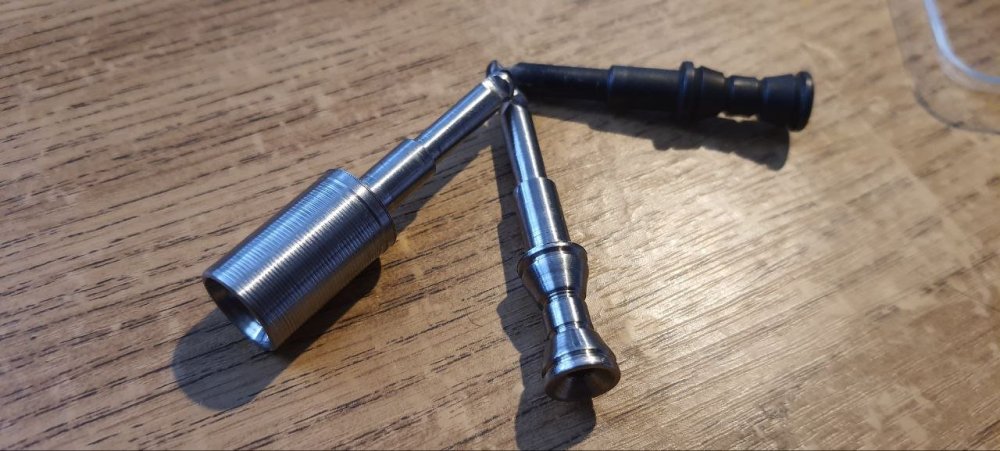
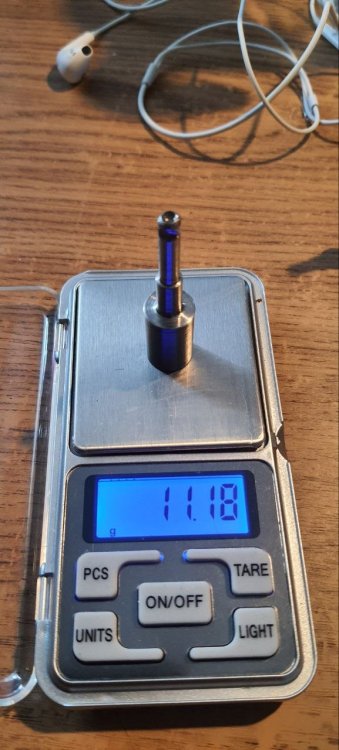
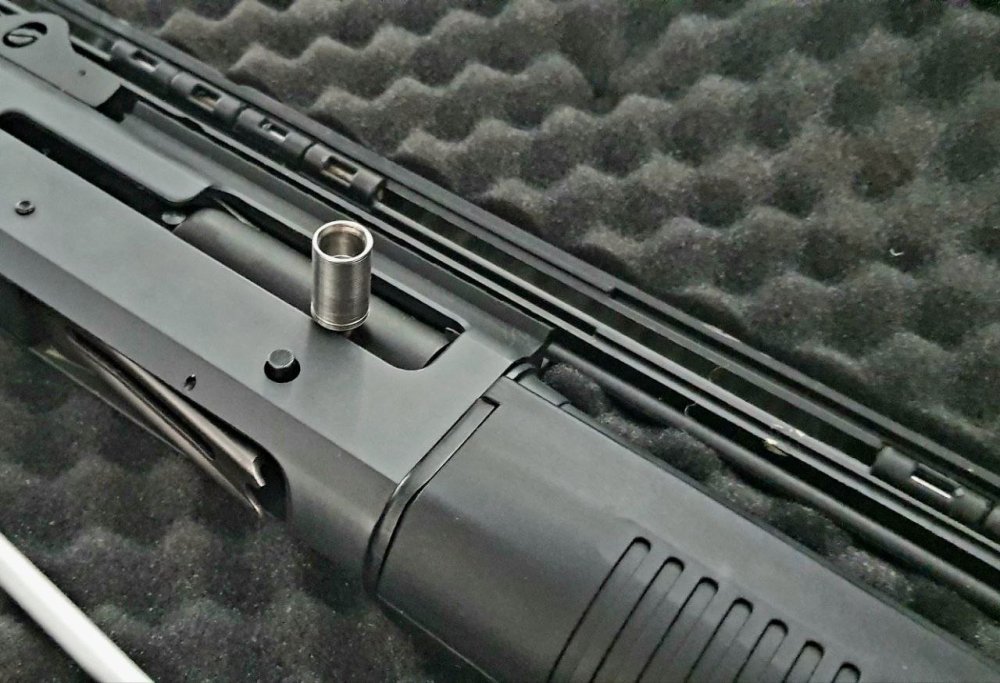
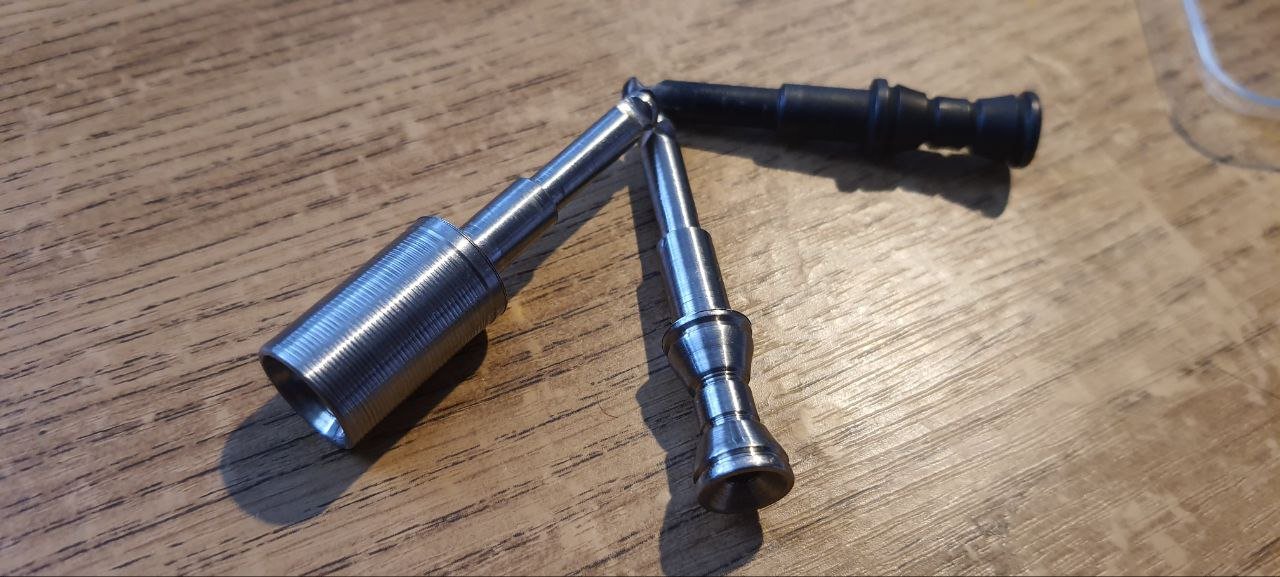
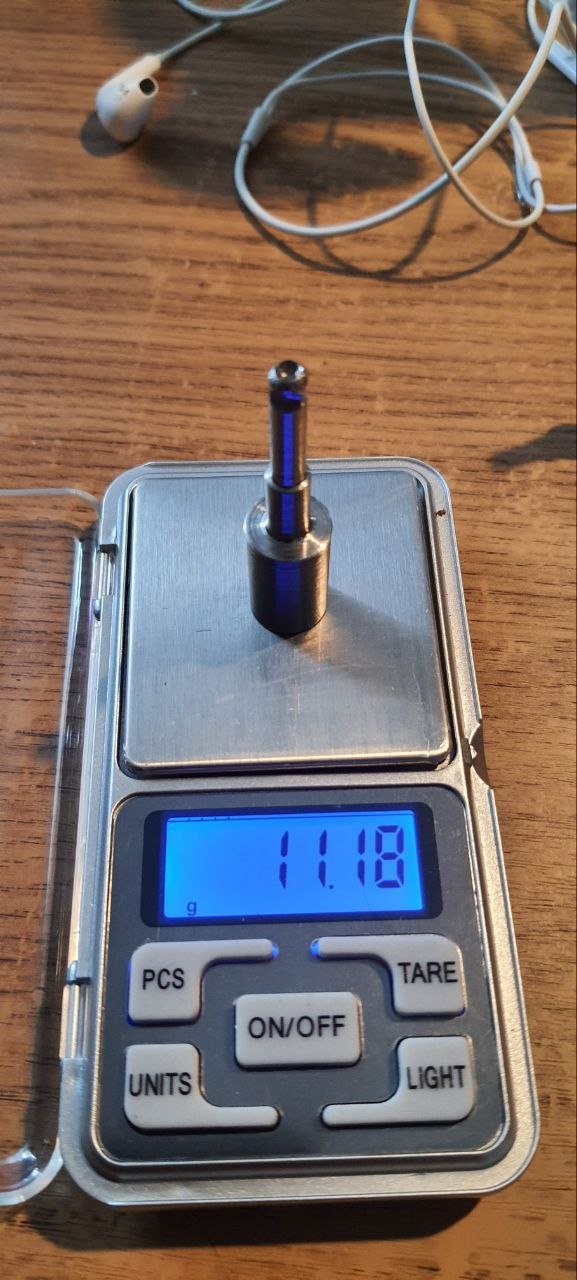
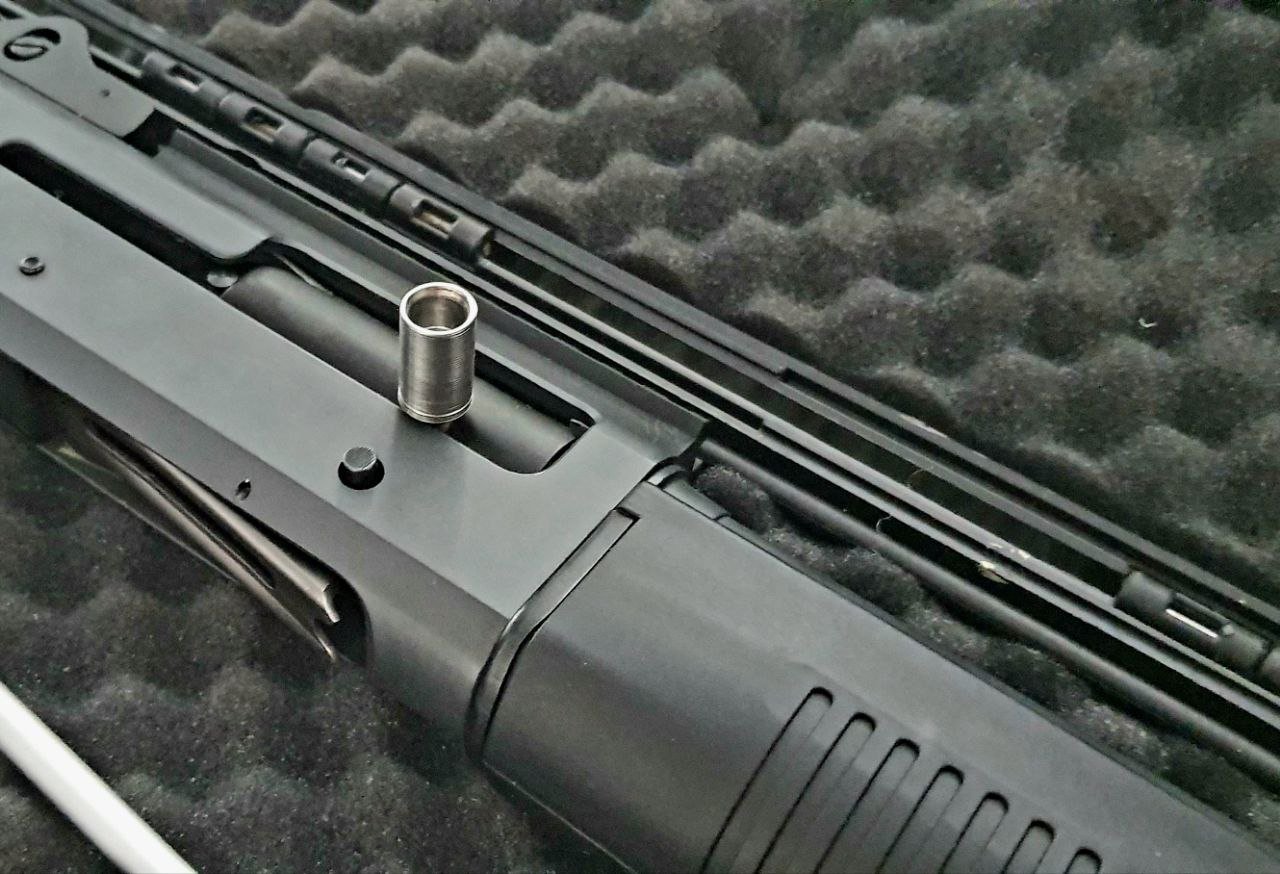
All you need is to find a turner and some titanium bar. I made these two handles myself, one of the original shape, but weighs half as much as the original. The second enlarged, weighs the same. The enlarged one has a fine thread on top to increase friction.
.thumb.jpg.c3c4c76eb134c054987caabb5750d152.jpg)
.thumb.jpg.f9ee105c83fa996f6dce10c7f305b50d.jpg)
.thumb.jpg.b1ef46b505a1844a79d20da3ac92877d.jpg)
.thumb.jpg.55e2e4187ab91290321d93f967329f00.jpg)
 1 point
 -
I agree! I doubt it left Benelli that way. The LGS was probably hoping you wouldn't notice.1 point
-
Probably happened at the dealer/gun shop would be my guess. Pisser they did not mention the scratch/ding. If you don't get satisfaction from the dealer, I'd suggest shooting/enjoying the gun and getting the part cerakoted down the road. There are good folks here who can advise on taking it apart.1 point
-
Colt AR LE 6920 BENELLI M4 Sig Legion 229 (9)mm1 point
-
Must have been a reason that I bought and stored a 100 bricks of 550 rounds of federal 22lr. Oh yes, I have a 22lr conversion kit for my Ar15 MRP -- Dual role rifle. Fwiw, 50k+ rounds of 22lr weighs about 600 pounds.1 point
-
lol... ok?? haha strange post o_O-1 points
.jpg.2c0de05e26e876b307b923f794bb75ce.jpg)
.jpg.539feb0f9ba1d76f4725d3ebbbe4b34e.jpg)
.jpg.6b2c88151751c5a42add5f37e819f33e.jpg)
.jpg.8fee6bc986c5ab0c2e4e84dd436dce3b.jpg)

This leaderboard is set to New York/GMT-04:00